Moth Mullein

A couple of years ago, I found a weed growing in the horse paddock. For some reason or another—simple laziness, or a terminal case of procrastination, or possibly some sort of minimally hostile curiosity—I refrained from plucking it up out of the ground or giving it a good soaking of 2,4-D. Eventually, its buds opened into flowers and I was right glad I’d left it alone.

Its blooms of bright yellow petals with purple centers were rather lovely. After I posted a picture online, one of my Facebook friends identified it as “moth mullein.” I was a bit disappointed that none ever sprouted and bloomed in the paddock last year. This year, my good fortune has returned: two plants have grown up in different places in the paddock.

A wee bit of online research this morning indicates that moth mullein is either the eighth sign of the Apocalypse, a portender of the Great Satan and omen of ruinous invasion OR it is a benefactor of hummingbirds, honeybees, and other pollinators and would make a lovely addition to anyone’s collection of floral delights.

It reminds me of my high school Ag teacher, Jamie Potts, and his definition of a weed. “A weed,” Mr. Potts declared in my sophomore Ag class, “is any plant growing where it’s not wanted.” Corn growing in a soybean field becomes a weed. Soybeans sprouting up in a corn field. Giant pigweed growing anywhere, I’d reckon. By some sort of logical inference, extension, and inversion, I subsequently concluded, “If you didn’t have to plant it, it has a pretty bloom, and you like where it is, then it is a wildflower.”

Therefore, friends and neighbors, until sufficient aggravation and displacement of timothy, orchard grass, bluegrass, and other forage, I deem moth mullein a wildflower on our particular plot in Blair, Kansas. Notwithstanding that Nebraska and Colorado may have declared it an invasive species, it is hereby denoted a protected species here at Haven Hill.

Considering the potential differences of opinion this might precipitate reminds me of something else. That old adage about “blooming where you grow.” I think it ought to include a disclaimer: some places are better for growing than others. Trying to bloom where people are constantly attacking you with garden implements and poisons might not be your best option. While I fervently believe “God can use you anywhere,” even the apostle Paul would seek life elsewhere from time to time when folks sought to rather quickly change him from missionary to martyr. And God used him no matter where he went.

Being able to sort of play God with my moth mullein, I have already relocated one of the aforementioned specimens into a section of planter space up by the house that has proven heretofore to be rather inhospitable to desired domestic species.

Perhaps in a couple more years, I’ll have enough blooms for a moth mullein bouquet. Or, maybe, I’ll just have a few more dead weeds…

Posted in Christian Devotions, Christian Living, Farming, Gardening, Humor, Metaphysical Reflection, Spiritual Contemplation | Tagged , , , , , , , , , , | Comments Off on Moth Mullein

The Hope of Wildflowers

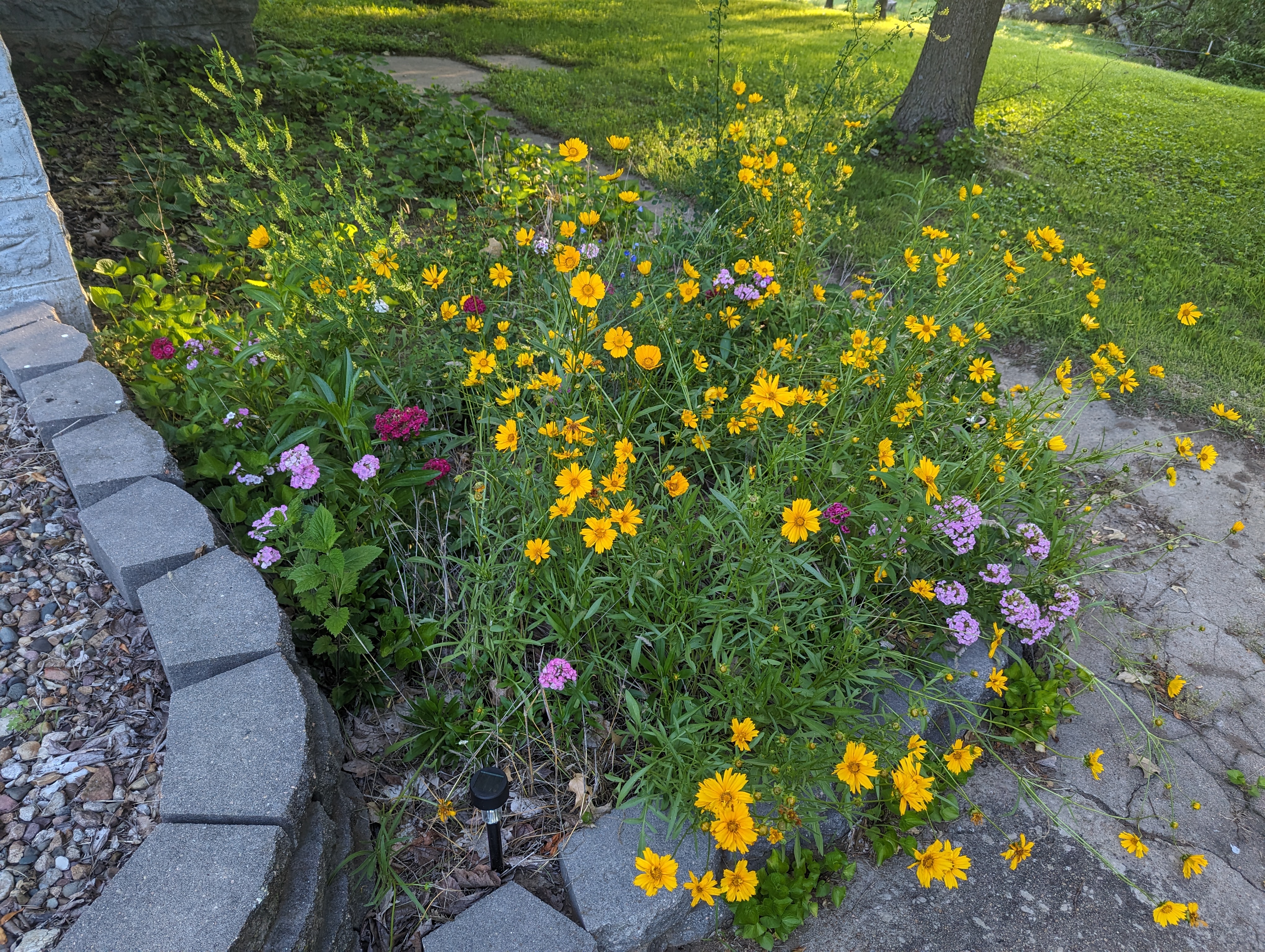
Two years ago, I sowed an assortment of wildflower seeds in the southeast corner of our landscape bed next to the front porch. Many of the seeds sprouted and most of them bloomed that summer. Not as many as I had hoped, to be honest about it. There were a few pictured on the packet that didn’t show up. Still, it wasn’t a total waste of time. Even a few blooms were prettier and more to be desired than the grass and weeds that also sprouted up.

Given that slight disappointment, I didn’t bother buying any more wildflower seeds last year. Anything that sprouted up on its own would be more than I expected. And so, I was slightly surprised to see a few volunteer plants come up and bloom. Nice, but nothing to write home about, I guess you could say. To be sure, I never wrote home about them.

A couple of weeks ago, sometime in between leading horses to the pasture and picking up broken branches in the yard, I noticed a few blooms in that corner. Last week, more blooms. And now, nigh onto June here in northeastern Kansas, and everywhere else on the planet, I suppose, there’s a flourish of wildflowers blooming there! I couldn’t tell you the name of any of them right offhand, but I can tell you they’re lovely.

A whole bunch of bright yellow ones that look like a cross between marigolds and daisies. Two variations of ones that form big round clusters of lavender or cranberry colored blooms. (It’s not that I can’t decide which color they are; some clusters are lavender and some are cranberry.) As the lavender ones age, the blooms turn white toward the center of the cluster. Then there are the ones on tall, slender stems that are just starting to open up. Sort of a baby blue hue with a delicate, thin blossom. Starts out in a bell shape and then flattens out as it grows larger. Faintly reminiscent of petunia.

The colors are bright and varied, the form and texture interesting and pleasing. A rather satisfying mix of shapes and tones set against a green background.

Possibly the greatest pleasure I take from the bed is the complete lack of effort it has taken me to grow them. Unlike the roses that take the annual pruning and regular watering, unlike the hostas that require plucking out the old sprouts and raking up the dead leaves, as well as the watering. Unlike the beautiful but aggressive honeysuckle bush that I have to fight back a couple of times each summer, this little patch of wildflowers has required nothing at all from me. The appreciation part comes without deliberate effort.

Even as the Lord provides both sun and rain to the just and the unjust, irrespective of effort or merit, so have these wildflowers sprouted up, grown, and bloomed. All I had to do was sow some seeds a couple of years ago and then stay out of the way. Doesn’t seem all that hard, does it?

But man, oh man, that knowing what to weed and what to water, and when to just stay out of the way—sometimes that seems to take the wisdom of Solomon, doesn’t it?

Posted in Christian Devotions, Christian Living, Gardening, Metaphysical Reflection, Nature, Spiritual Contemplation | Tagged , , , , , , , , , , , , , | Comments Off on The Hope of Wildflowers

A Prayer for Shaping

Help me Lord, I pray, that I would long for righteousness in the same way that I long for food and water when the dry wind saps my strength on a day of long labor.

Help me, Lord, that I may show mercy with the same eagerness in which I receive it when the consequence of my own choices has driven me into agony and despair.

Help me Lord, that I may delight in forgiving others even as I rejoice in being forgiven when guilt and shame have mired my spirit in the soil beneath my feet.

Help me, I pray, to bestow compassion without considering the worth or merit of the wounded one who stands before me or walks beside me.

Help me, Lord, that I might shun violence and controversy and strive for peace with greater effort than that which pulls me toward achievement or recognition.

Help me, Lord, to embrace insult and humiliation, reproach and criticism, in a spirit of humility, remembering the way you responded to those who mocked you and delighted in your pain. Help me to exchange blessing for cursing, good for evil, love for hostility.

As the drowning soul aches for air, let me gasp for your presence, crave your very nature, and yield without reservation to the shaping of your hand and the leading of your Spirit.

Help me, Lord, to be a child of God rather than a man of the world.
Posted in Christian Devotions, Christian Living, Poetic Contemplations, Poetry, Prayer, Spiritual Contemplation | Tagged , , , , , , , , , , , | Comments Off on A Prayer for Shaping

Fervent Prayer

Have you ever pled fervently for something? A particular project at work, an idea for your church or other civic organization? A vacation proposal for your family or a romantic getaway for just you and your spouse? Spending the night with a friend when you were in third grade?

Everything about us goes into a fervent plea, doesn’t it? Our emotions, our thoughts, our energy, our deepest feelings, our intensity… all are brought to bear. Hopefully, not because of our desire to control or manipulate but because of sincere, deep longing, and genuine belief.

Now, focus that same notion on prayer.

Casual prayer is just mentioning something in passing. “Oh, yeah, God, if you could…” Concerned prayer is when someone we care about is facing some trial or challenge. It’s sincere and compassionate and, well, concerned. We spend several minutes asking God to intervene.

Fervent prayer is what we do when someone we love deeply is in dire circumstance. Maybe ourself. It comes from the deepest, most twisted parts of our being and continues in our thoughts even when we are not actually down on our knees. It is the kind of prayer that James describes (James 5:16-17) as being genuinely powerful and effective: fervent prayer.

The Amplified Version translates it as “heartfelt and persistent.” I love that! It’s not prayer arising only from habit or sense of duty; it’s the real deal, baby!

I confess that too much of my prayer is not fervent. It’s too often casual, even though the concern might be genuine. Pretty easy to confirm that “you’re in our thoughts and prayers” but a whole ‘nother matter to elevate it to fervent prayer.

I remember years ago visiting a congregation that kept a box in the foyer with a slot on top. Members and visitors were invited to write prayer requests on a slip of paper and slip that paper in through the slot. At a designated point in each service, one of the deacons would bring the box to the altar and lift it up as the pastor and congregation prayed for the “needs listed in this box.” I loved the symbolism of it and the visual element.

But it also seemed a bit too easy. Thirty seconds of nebulous concern and expression. “Hey, God, you know what’s in here, take care of it.” There’s a comfortable anonymity and not much of a burden on anyone, not even on the deacon holding up the box. It reminded me of a phrase my Dad often used in his prayers at our family table: “Be with those throughout the world for whom it is our duty to pray.”

That takes in a whole lot of territory!

But I suspect that thirty seconds of sincere intervention for just a few of those individuals would be better. And I’m quite confident that thirty minutes of fervent prayer for one or two would be much more powerful. I think that’s probably the kind of prayer that Paul attributes to Epaphras who was “always laboring fervently for you in prayers.” (Col 4:12)

Laboring in prayer. Not sedentary activity (admittedly, that’s an oxymoron), not easy exercise, not almost breaking a sweat. Laboring. Like actual work, you know.

That’s the kind of prayer that touches the heart of God and gets results. It ain’t easy, my friend, but it works.

Posted in Christian Devotions, Christian Living, Prayer, Spiritual Contemplation | Tagged , , , | Comments Off on Fervent Prayer

Strawberry Fields Forever

Two years ago, I bought a bundle of a dozen strawberry plants at the We Sell Plants & Stuff Market next door to our little place here in Blair, Kansas. They were labelled “Everbearing.” I was suspicious that that label might be a bit misleading, being particularly skeptical that I’d be picking fresh strawberries in January. But I was willing to settle for May through September, which is what the everbearing plants we grew in Arkansas City had done.

I took these home, spaced a dozen holes alongside the old gray railroad ties that formed our little garden’s eastern border, and set the strawberries. I was pleasantly surprised that they actually bore a few berries that first season. One session of blooming and bearing and that was it.

“Oh, well,” I thought, “maybe it’s the second season before they become ‘everbearing.’”

Nope, wrong again. They did send out rooting shoots and pretty much doubled their own population. And they bore some fine berries in May of that second year. Then, they went about their non-bearing duties, sending out more shoots and rooting those.

This year, they have flourished rather well. That original dozen plants have propagated and populated the entire eastern edge of the garden, even encroaching into the onion and potatoes’ space. I haven’t counted but I estimate that we have at least six times as many plants as we started with. And they are bearing a fine crop of strawberries this year. I admit to a remote bit of regret and resentment about the mis-labelling that led me to my original purchase. I’d rather enjoy having a few months of fresh strawberries instead of just a few weeks.

I suppose I could dig up the whole batch of berry plants, take them back to Fleek’s and demand a refund.

But the more I keep eating these fresh strawberries, the less that idea appeals to me. It’s certainly not the first time in my life that having things turn out differently than I expected turned out to be better than I expected. In fact, there are times I’d swear somebody who knows more than me was actually working things out on my behalf. And frequently providing blessings even better than fresh strawberries.

Posted in Christian Devotions, Christian Living, Gardening, Metaphysical Reflection, Spiritual Contemplation | Tagged , , , , , , , , , , | Comments Off on Strawberry Fields Forever

The Sun Is Still Shining

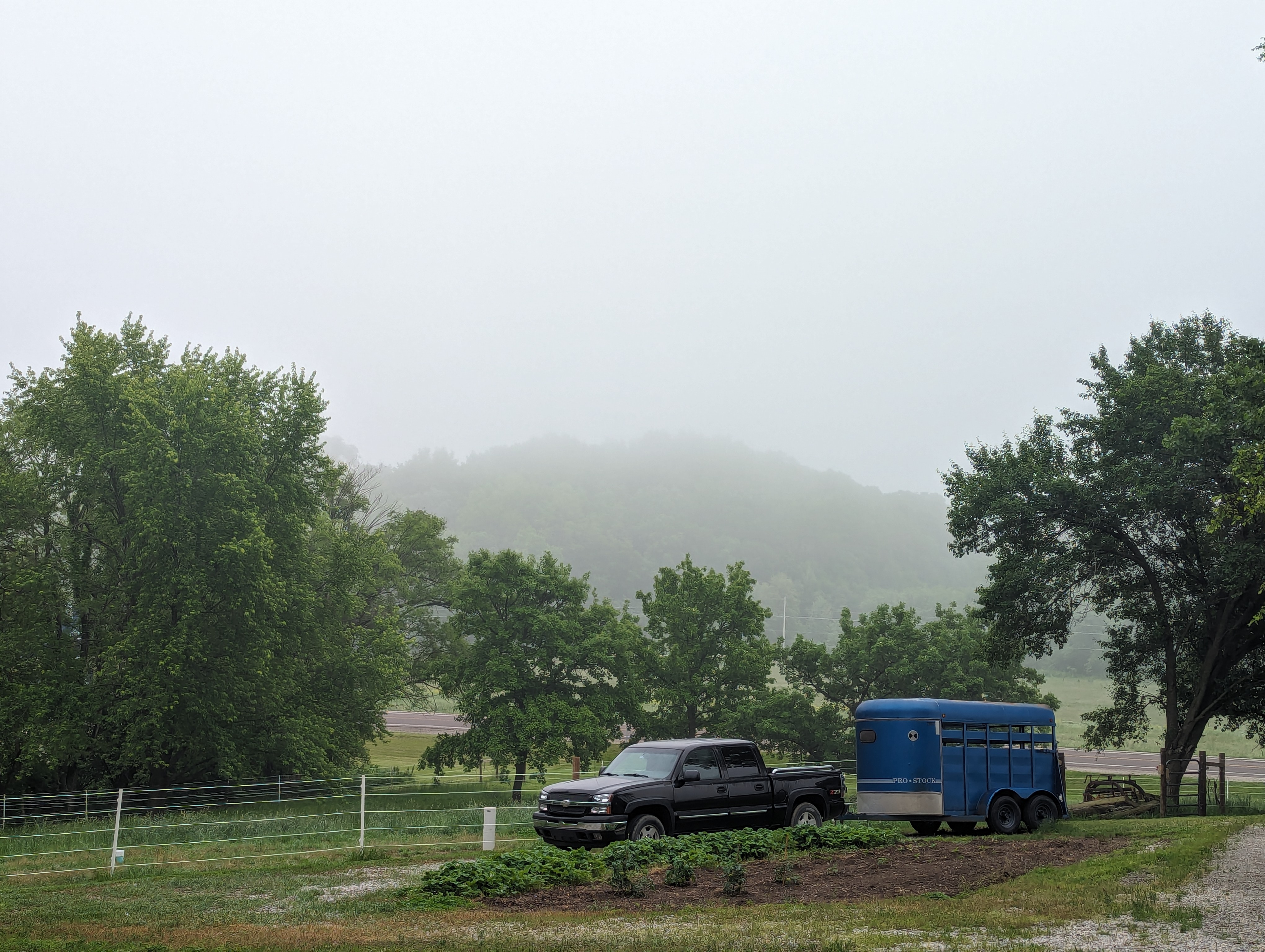
It is eight-thirty in the morning on the middle day of May. The temperature is pleasant, just slightly cool. The sun is shining brightly.

Now, if you were here, you might take exception to that last statement. If you were to look outside right now, you’d see no bright patches of light, no defining shadows stemming west from the house or garage or trees or anything else. You’d see a rather thick bit of fog wrapping around the hills and woods and dulling visibility to something in the neighborhood of a half-mile or so. And so, you might argue, “The sun is NOT shining brightly.”

Ah, but it is, my friend, it truly is. As brightly as it ever shines in the middle of May or any other day, give or take. I know because I have been above the fog and the clouds and I know that even on the stormiest, darkest day, the sun is still shining. The sun changes very little from day to day and I’d even dare to say that we could not see any differences with the naked eye. Nor would I suggest we try.

What changes is the elements of the atmosphere that are nearest to us: clouds, dust, smoke, fog, rain, snow, and what have you. Our perception of the sun may shift with each of those. The warmth we feel certainly changes. Our attitude changes. But the sun… not so much.

Perhaps a bit too often, our notion, awareness, and appreciation of God depends too much on personal circumstance. Clouds and fog and rain and tornadoes and such… they come and they go and sometimes leave us marred and marked and scared and scarred.

Those whose God seems more like Grandpa Santa Claus will find their appreciation shaped mostly by how well they like the particular gift they just unwrapped. Those who believe that he causes all things to work together for our good are able to sense the sunshine even on a gloomy day.

They know that clouds and rain are just different aspects of what it takes to ripen the green, growing strawberries bordering the old railroad ties in a small garden on a foggy morning in the middle of May. They know that no matter how dark the day, the Son is still shining.

Posted in Christian Devotions, Gardening, Metaphysical Reflection, Nature, Poetic Contemplations, Spiritual Contemplation | Tagged , , , , , , , , , | Comments Off on The Sun Is Still Shining

The Pleasure of Pasture

Throughout the brown months in northeastern Kansas, we keep our gaited geldings, Earl and Jazz, in their quarter acre paddock. After a few months of their hard-hooved plodding about and milling around the round bale feeder, there’s nothing green there except for a few sprouts of burdock, milkweed, and dandelion. All else is bare dirt. Or mud, after the rains.

Fortunately, we’re able to move them back over to pasture each day now. It’s pretty easy to detect their anticipation of that ritual when we halter them up each morning. Heads up, ears tilted forward, walking willfully toward the gate. Sometimes, they’ll drop their heads and start grazing as soon as we turn them loose in the pasture. Other times, they’ll charge off in a full gallop and run to the other side of the before they start eating. In every case, it’s clear that they love the opportunity to forage in the lush green grass. Randa and I will sometimes shake our heads and grin at each other over how the boys react.

I’m pretty sure our heavenly Father enjoys seeing us when we have that sort of expectation about feeding on his Word, nourishing our souls in the fellowship of prayer, delighting in our adoration of him. In every season, the Lord draws near to those who draw near to him.

Posted in Christian Devotions, Farming, Prayer, Spiritual Contemplation | Tagged , , , | Comments Off on The Pleasure of Pasture

A 2000 Year Old Question

So… this dude runs into some really bad dudes who kick the crap out of him, take all of his money and jewelry, and leave him bloody and barely alive in the ditch by the side of the road. This guy looks like he got jumped by a whole group of MMA fighters trying to set the record for most kicks and punches landed in three minutes.

Church deacon comes by, looks over at him, and thinks, “Holy crap! Looks like somebody kicked the patoosky out of that guy!” Just to be sure said guy doesn’t reach out and grab him by the ankle, and moan for help, he moves over to the opposite side of the road and goes on his way.

Internationally renown televangelist walks up on the scene. Jumps halfway out of his Gucci loafers and lands on the other side of the road. “Oh, oh, oh, praise God that’s not me or someone I know!!! All that blood would be so hard to get out without any stains!” Continues on his way, possibly keeping the pitiful man in his thoughts and prayers for several paces.

Then, and this is where my memory gets a little fuzzy… I can’t remember if it was some Black dude from St. Louis, or an illegal immigrant, or a Democrat. Come to think of it, it might have been some skinny Muslim guy with a really thick, black beard. Anyway, whoever it was, as soon as they could tell it was a human lying there all beat and bloody, they came running up. Wiped as much blood as they could off the guy’s face, applied first aid, and hauled his wretched remnants to the nearest hotel.

He rented a room—actually paid for a whole month in advance, and some extra on top, you know, for incidentals like antibiotics, bandages, and such—and took the guy inside and got him cleaned up and settled into the bed.

“Listen,” he tells the manager, “You get this dude anything he needs until he’s able to take care of himself again. I’ll be back in a couple of weeks and if I didn’t already give you enough money, I’ll take care of it when I come back.”

Interesting thing about this story—none of those three guys were looking for someone to help. Well, I guess that’s pretty obvious that not only were the first two not looking for someone to help, they were actively going slightly out of their way not to help, even though the poor hapless victim was of the same ethnicity, religion, and national origin! Our third dude wasn’t looking for someone to help, but help is exactly what he did. Why? Because his heart was bigger than his social experience and his compassion was stronger than his inherited prejudices.

Ironically, if the poor, pounded blob of leftover martial arts test dummy had been fully conscious and completely mobile at the time of their initial encounter, he would have most likely sneered in contempt and refused to even speak to the guy who ended up saving his life!

Okay, so admittedly, this is a stolen story with slight modifications and modernization. But it seems that even after two thousand years, it seems that some of us might need to be reminded, “Who is my neighbor?”

Posted in Christian Devotions, Christian Living, Relationships, Spiritual Contemplation | Tagged , , , , , , , , , , , | Comments Off on A 2000 Year Old Question

In Praise of the Iris

I’d seen them growing in the gardens and yards of neighbors while Dad drove through town or while I was riding the bus to school at Trenton. I was in high school before I knew what they were called but I had for years admired iris blooms.

Admiration often occurs well before understanding, doesn’t it? We don’t have to even know the name of a thing, much less be able to explain it, in order to appreciate its beauty. With no comprehension of light refraction or reflection, or even a hint of awareness of atmospheric particles, we can fully adore a spectacular sunrise or sunset. Without even having heard of prismatic affect, we gape at the rainbow.

Granted, the more I have learned about the universe and the atom, and many of the aspects of creation in between, the more I have marveled. But I have tried with reasonable success to keep knowledge and understanding from interfering with appreciation and admiration. Thus, my continued infatuation with iris blooms.

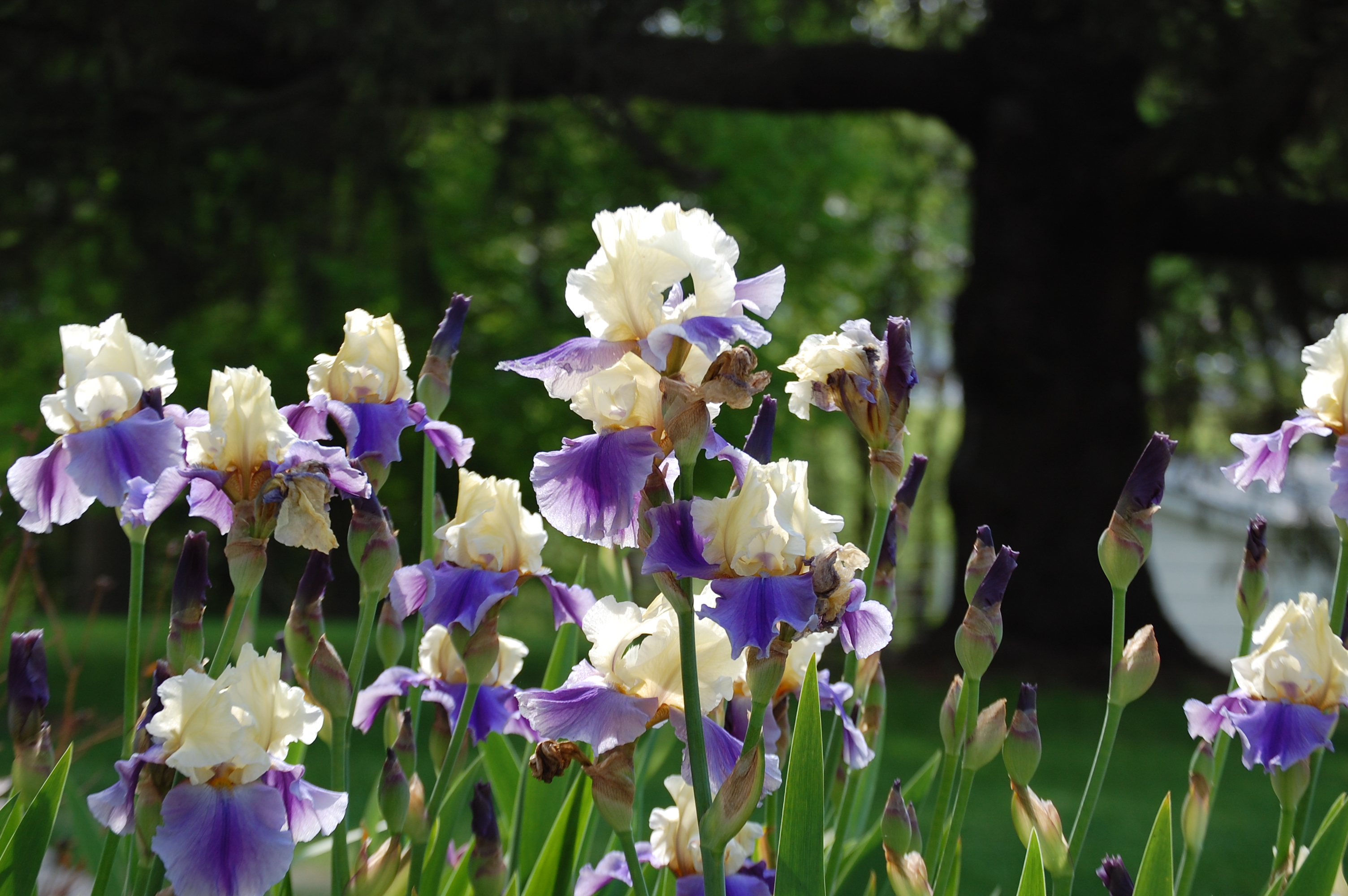
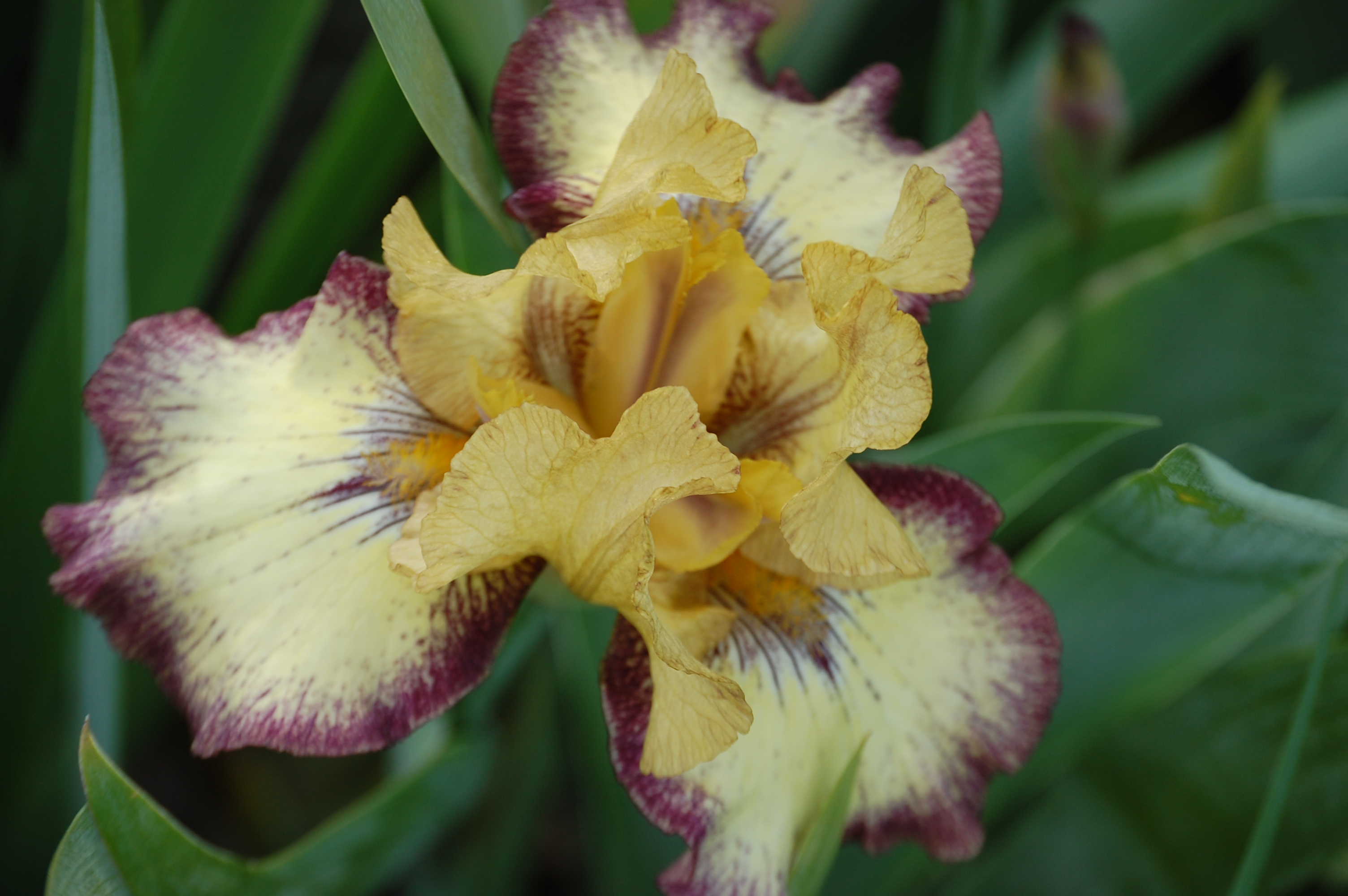
Their lush delicacy, their intricacy of shape and form, their spectacular richness of color and intensity of hue. The intermingling of subtlety and drama. The mystery of their hidden elements. The seeming infiniteness of variety in color as well as style. Even the rose does not rival their glorious display. Though the gladiola is also lush and wonderful, no other flower common to West Kentucky in my years of growing up even approached the level of mesmerizing beauty I still see in the iris.

And yet, in the unopened bud, there is not the slightest suggestion of the loveliness that will emerge. Even though every aspect is already being formed, nothing about that hard covering gives hint to what will come forth. We must wait for its revelation. And even though the first bits of petal that thrust their way out of the encompassing bud do give notice of at least some of the color, we must wait until the blossom is fully formed to truly observe all that it is and will be.

God’s plans and purpose in our lives do not always emerge fully formed. Even as he reveals more and more, we often cannot acquire the angle of view required to comprehend all that he is doing. We have neither the perspective nor the depth of insight and understanding to see the glory of his will and purpose. Even as things unfurl, we may still not grasp the full meaning and effect. We are focused on a narrow slice of a single petal; he is concerned with a garden the size of the planet and even more. We struggle to comprehend the meaning of the green-sheathed bulge at the end of a stem while he is at work in fulfilling the masterpiece of his design.

From time to time, we may even overlook how our own kindness, compassion, mercy, and forgiveness accomplish the complete expression of his love for us and others. So long as we submit to the shaping of his hand and the leading of his Spirit, we are being formed into the completeness of the image of Christ. We are being fashioned into a spectacle of beauty and spirit that exceeds our capacity to comprehend.

The bloom of the iris has no awareness of its own glory and wonder. Nor does it need it.

One day, when we look into the divine mirror of our own lives, we will fully understand the marvelous work that God has done in us. And we will give him all the glory.

Posted in Christian Devotions, Gardening, Metaphysical Reflection, Nature, Spiritual Contemplation | Tagged , , , , , , , , , , | Comments Off on In Praise of the Iris

Restless in Kansas

It seems simple enough to convince myself
that it is the nagging back pain keeping me awake
once again in this nebulous late night/early morning
when the forming mix of nerve signals and synapses
work in unspoken collusion, a fusion of thoughts and twinges
that have unhinged sleep:
arthritis and vertebrae keeping me
from a long day’s well-deserved rest.

But in an honest moment,
I’d confess it has more to do
with the sobering news of a good friend’s diagnosis:
“This is not one you usually beat.
The doses of chemo don’t stop anything;
they just slow it down.”

After an hour of hoping to slip back into sleep,
I give up, find enough clothes in the dark
to keep me from shivering (for the most part)
and ease my way down the stairs,
taking care to walk right against the edge
to keep the creaking steps from waking Randa.

After taking another pain pill,
I walk out the back door,
welcome the slight chill of still night air.

A densely yellow half-moon
spoons just above the timber on the southern ridge,
whitening the thin edge of a long, lean cloud
and tracing faint shadows of iris stems and blossoms
against the white siding on the house.

I sit for a while on the edge of the concrete slab,
watching the way the clouds drift across the moon,
studying the black silhouette of the big spruce,
and how the billowing blooms of the iris
seem translucent in the muted light of such a peaceful night.

The moon slides between phases of brightness
sifted by passing clouds
until the bigger, thicker, darker ones move in
and the veil becomes a shroud.

In the passing skies of our lives,
we move through seasons of calm and storms,
faith tracing its own formings
as we search among the shadows,
finding the true shape of promise
held in fine-textured petals
and the firm founding of ancient stones

until all that we know
brings us fully and finally
home.


H. Arnett
4/30/2024
Posted in Christian Devotions, Christian Living, Death & Dying, Nature, Poetic Contemplations, Poetry, Relationships, Spiritual Contemplation, suffering | Tagged , , , , , , , , , | Comments Off on Restless in Kansas